1989: The Conference That Started a Field
40 years of Foresight
In the autumn of 1989, a group of scientists, engineers, and visionaries gathered for the first Foresight Conference on Nanotechnology: the first ever comprehensive conference on the topic of nanotechnology.
There was no established field to convene around. Only a vision, articulated by Eric Drexler: that our ability to build machines at the molecular scale would not just improve technology, but transform the very foundations of how we as a civilization create things.
The vision rested on two ideas that, in 1989, were almost entirely theoretical.
First: that constructing and observing at the molecular scale would become possible, and the construction of machines at that scale. Second, and more radical: that such molecular machines could be made to build more machines, shortening capital formation times and increasing economic growth rates.
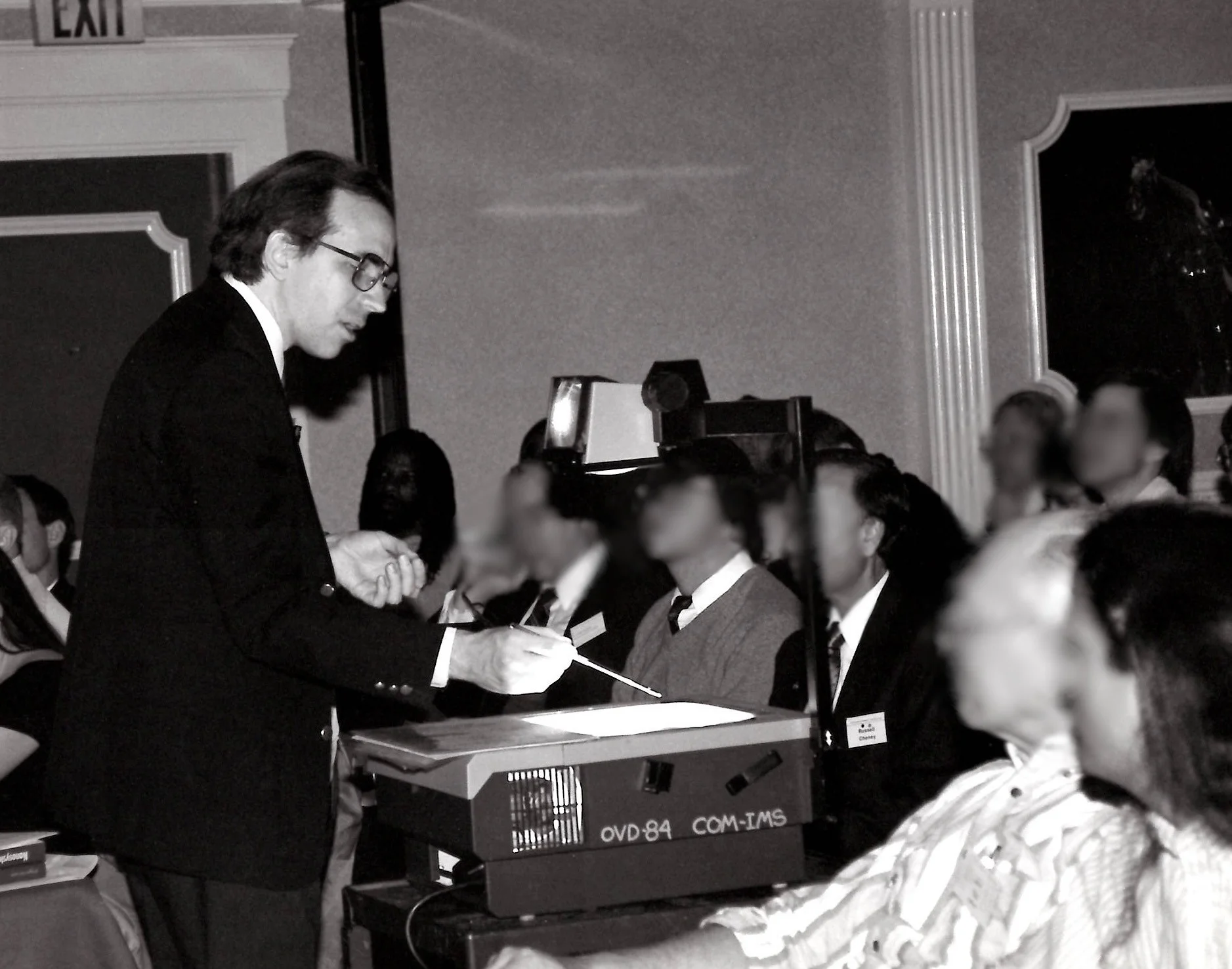
Foresight cofounder Eric Drexler speaking at an early conference.
The first Foresight Conference on Nanotechnology was originally planned to be held at Stanford. Then, ten days before it opened, the Loma Prieta earthquake struck the Bay Area. All sessions were relocated to the Garden Court Hotel in Palo Alto.
On October 27–29, 150 invited participants arrived from three continents: researchers from MIT, Caltech, IBM, AT&T Bell Labs, the University of Tokyo, and DuPont, alongside a Japanese delegation whose government had already designated molecular systems engineering a national priority. Our co-founder Eric Drexler opened with a warning: “The U.S. must join in or risk being left behind.”
What followed was not like many scientific meetings before it. Protein designers sat with quantum physicists. Computer scientists argued with chemists. Researchers in biology, scanning probe microscopy, molecular modeling, and molecular electronics were all drawn to the same theme: understanding and building structures, devices, and systems on the scale of molecules.
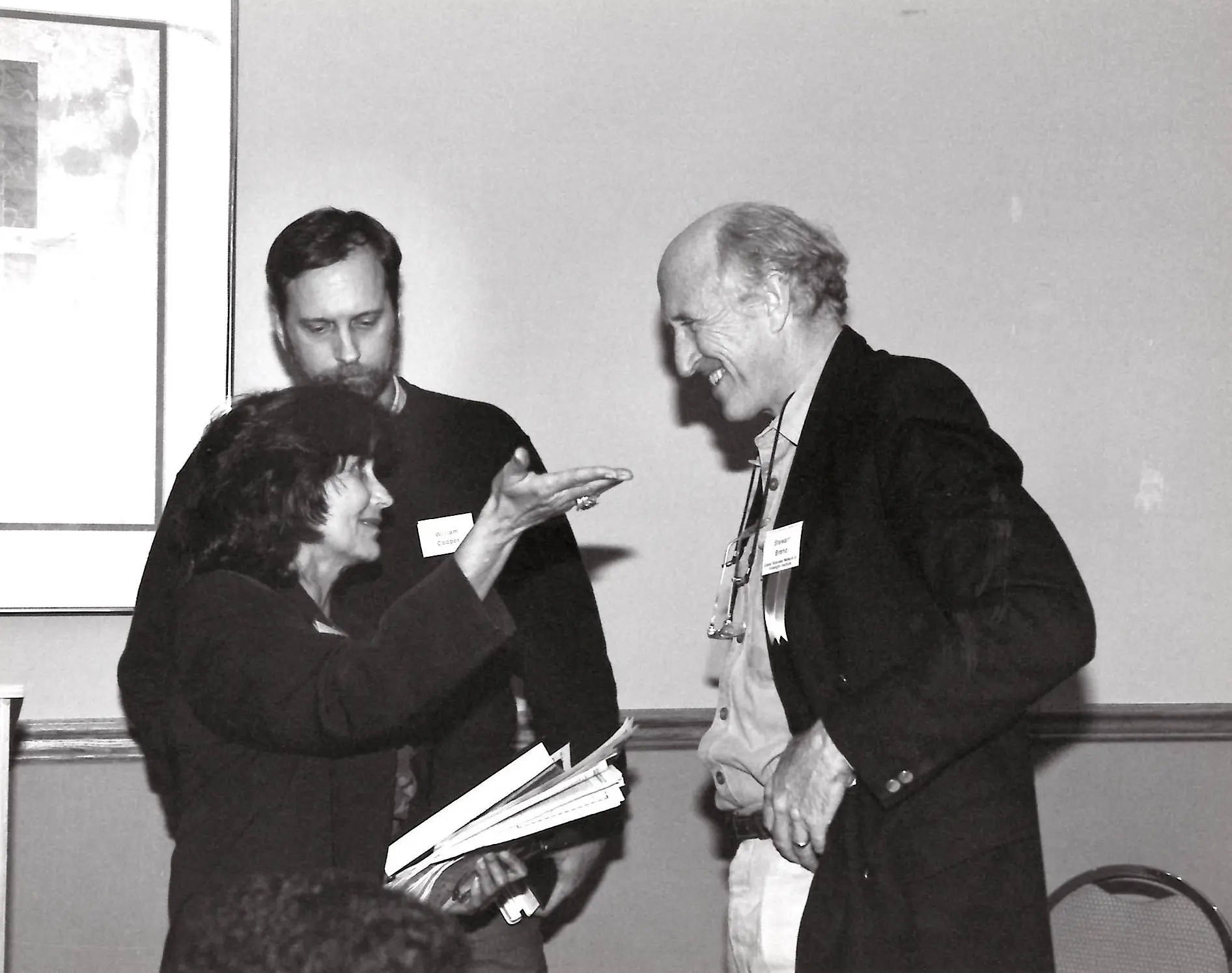
Foresight advisor Stewart Brand (right) at early Foresight conference.
Federico Capasso of AT&T Bell Labs described quantum transistors operating at the nanometer scale. Tracy Handel of DuPont presented the first ‘de novo’ designed protein – a dramatic proof that objects of multi-nanometer scale could be built to precise molecular specifications. Bill Joy, Vice President of R&D at Sun Microsystems, asked the room what we could do with a trillion processors – then admitted he had trouble envisioning it. Ralph Merkle addressed the challenge of controlling self-replicating systems. John Foster of IBM’s Almaden Research Center demonstrated atomic imaging and the ability to pin individual molecules to a surface.
Drexler outlined a design for an assembler: a device capable of building virtually any chemically stable structure, molecule by molecule, with a positional standard deviation of less than 0.04 nanometers.
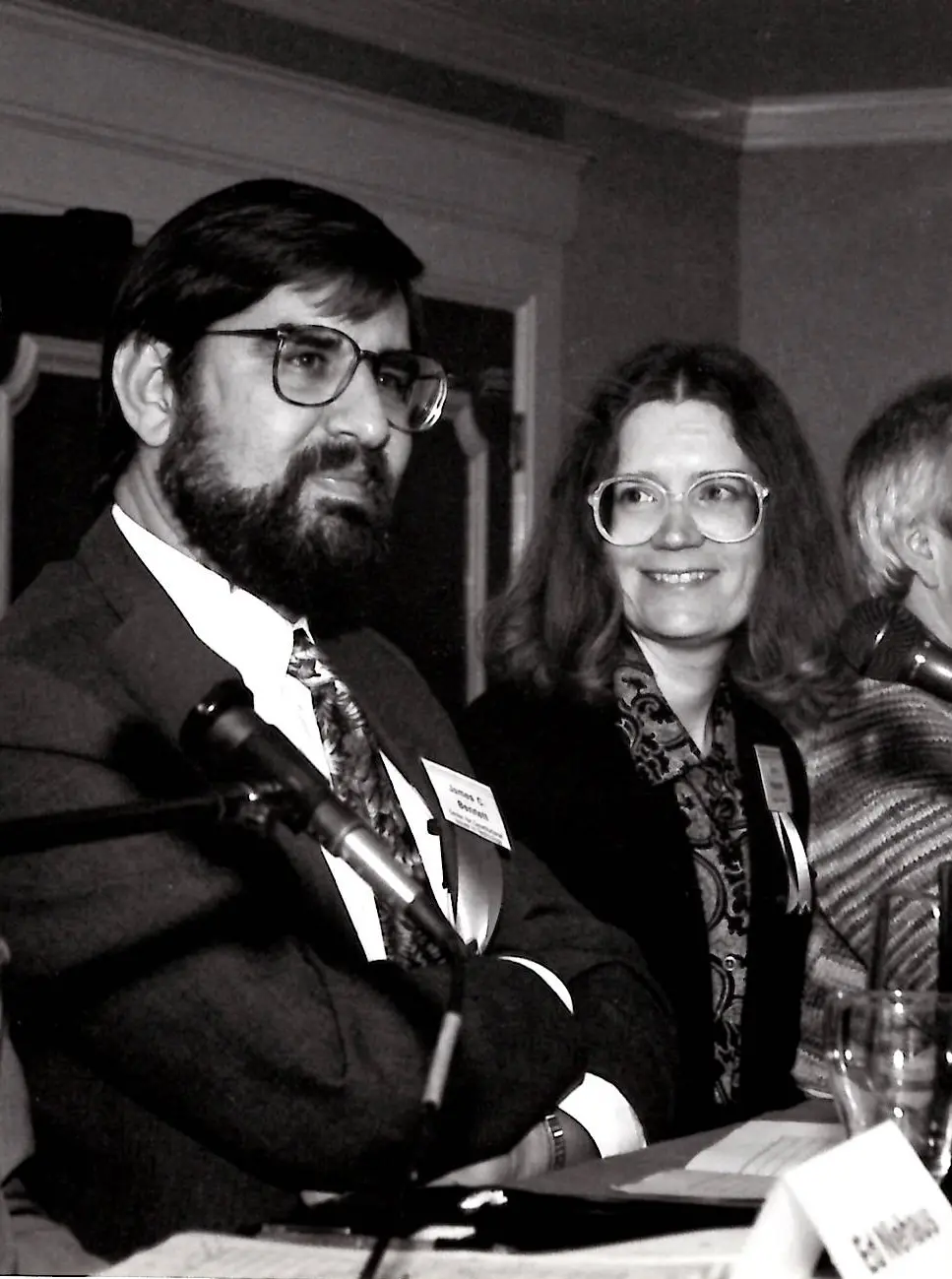
Foresight founding board member Jim Bennett and co-founder Christine Peterson.
The conference also did something rare for a scientific meeting: it looked honestly at consequences. Lester Milbrath asked whether society would be wise enough to use the technology responsibly. Greg Fahy of the American Red Cross raised the prospect of nanotechnology enabling radical life extension. Arthur Kantrowitz argued for keeping research open rather than classified. Economist Gordon Tullock assessed the economic effects of transformative technology. These were not sideshows; they were built into the program from the start.
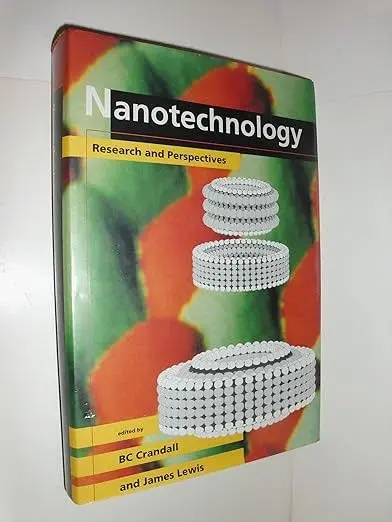
The conference proceedings were published by MIT Press in 1992 as ‘Nanotechnology: Research and Perspectives’.
The Biophysical Journal described it as “an impressive interdisciplinary cross-section of researchers… a highly accessible introduction to an interesting and expanding field.” Attendees called it “legitimizing, for me, the field of nanotechnology,” and “a cast of stars – so many top people.” Peter Schwartz of the Global Business Network left the conference and told colleagues: “This is likely to be a seminal event, seen from the turn of the century.”
What made this first conference remarkable wasn’t just the ideas, but the range of people and fields it brought together. This was a deliberately interdisciplinary gathering at a time when disciplines rarely spoke to each other. Physics, chemistry, biology, and computer science were brought in because Drexler’s vision required all of them. That cross-pollination became a signature of Foresight events, and forty years on, it still is.
Today, the world has caught up with the first leg of Drexler’s vision. Artificial molecular machines and nanoscale electronics are no longer speculative – they are the subject of Nobel Prizes.
The second leg, autogenous, self-reproducing systems, remains the frontier. It connects molecular manufacturing to artificial intelligence, and may be the most important question we have yet to answer. Forty years on, we still support scientists, funders, and institutional partners in advancing molecular machines’ progress toward atomic precision.
Discover our current work in Nanotechnology.
SOURCES & REFERENCES
Every factual claim in the story above is drawn from the sources below. Paragraph references are noted.
1. Foresight Update 7 — Conference Report by Ralph C. Merkle
Published: 15 December 1989 | Archive: legacy.foresight.org
Primary source for: dates (Oct 27–29), participant count (150), three continents, organisations represented (MIT, Caltech, IBM, Bell Labs, University of Tokyo, Du Pont), earthquake relocation to Garden Court Hotel, Bill Joy quote on computing power, Federico Capasso quantum transistors, Tracy Handel de novo protein design, Ralph Merkle on self-replicating systems, John Foster atomic imaging, Eric Drexler assembler design (0.04nm positional standard deviation), Peter Schwartz quote, Japan national priority quote from Drexler, conference proceedings (MIT Press), press coverage (Science News, The Economist).
2. Foresight Update 7 — Conference Thanks by K. Eric Drexler (Chairman)
Published: 15 December 1989 | Archive: legacy.foresight.org
Primary source for: Stewart Brand / Global Business Network co-sponsorship, Christine Peterson’s role in organisation and coordination, Ralph Merkle recruiting speakers and sponsors, earthquake context (“Smooth despite unexpected problems — such as a major earthquake not long before the event”), Du Pont financial assistance, demonstrations by Biosym / Digital Instruments / Silicon Graphics / Tektronix / Tripos.
3. Foresight Update 8 — Conference Comments
Published: 15 March 1990 | Archive: legacy.foresight.org
Primary source for: attendee quotes (“Legitimized, for me, the field of nanotechnology”; “Cast of stars”; “Clearly a meeting of quality people who wouldn’t otherwise meet each other easily”), Michael Ward of Du Pont quote (“one of the most stimulating”), Prof. Josef Michl quote.
4. Biophysical Journal review of conference proceedings
R. A. Ghanbari and D. E. Clapham, Mayo Foundation — Biophysical Journal 65: 976–977 (1993)
Primary source for: “impressive interdisciplinary cross-section” and “highly accessible introduction” quotes.
5. Conference Programme — First Foresight Conference on Nanotechnology
Archive: legacy.foresight.org/Conferences/MNT1/ (or equivalent MNT1 page)
Primary source for: full speaker list and session titles (Bill Joy, Federico Capasso, Greg Fahy, Lester Milbrath, Arthur Kantrowitz, Gordon Tullock, Norman Margolus, Hiroyuki Sasabe, etc.), Stanford Faculty Club Saturday evening venue, session structure.
6. ‘Nanotechnology as seen from 20 years ago’ — Foresight retrospective
Source: provided by Foresight Institute (internal document / website copy)
Primary source for: the two-leg framework (atomic-scale construction + autogenous systems), assessment of what nanotechnology got right and what remains unfinished, reference to the 20th anniversary conference and Vimeo archive (vimeo.com/album/176287).
7. Conference Proceedings book
Nanotechnology: Research and Perspectives. Ed. BC Crandall and James Lewis. MIT Press, 1992. ISBN 0-262-03195-7.
Referenced for: proceedings published, 18 chapters, appendices including Feynman’s 1959 lecture and Drexler’s ‘Machines of Inner Space’ (1990).