1998: The Two Words That Changed Software
40 years of Foresight
In late 1997, Foresight’s office in Los Altos was running weekly meetings on computer security. A phrase coined in one of them – “open source” – would go on to name the foundation most of the modern internet runs on.
The connection to our core mission wasn’t obvious from the outside. Foresight was a nonprofit focused on nanotechnology and artificial intelligence, and software security was a field of its own. But we had concluded that the security and reliability of software was inseparable from the long-term safety of both fields. Freely shareable source code was emerging as a promising path. The problem was what to call it.
The existing term, “free software,” kept tripping people up. Newcomers heard “free” and thought of price. Every introduction required the same correction “We mean free as in freedom, not free as in beer”. The name for an important idea was losing ground before it could gain any. A clearer term was needed.
Christine Peterson, our Co-founder and then Executive Director, was thinking about this problem in the days that followed when she landed on an alternative term: “open source.” Not ideal, she thought. But good enough. A friend in marketing felt “open” had been overused and they could do better. He was probably right in theory, but no better option was on the table.
On February 2, 1998, software developer and free software advocate Eric Raymond, came to town to work with Netscape on releasing the Navigator browser code under a free-software-style license. We hosted a meeting that night at our Los Altos office with Brian Behlendorf, Michael Tiemann, Todd Anderson, Mark S. Miller, and Ka-Ping Yee around the table. The field was still being described as “free software,” or in Brian’s framing, “source code available” software. Christine had nearly settled on the term but hadn’t yet introduced it.
Between meetings, she did. She ran “open source” by her Co-founder Eric Drexler, Agoric pioneer Mark Miller, and Linux programmer Todd Anderson who liked it. The challenge now was introduction. She couldn’t simply announce it; she was not a programmer, and most in the room at the next gathering wouldn’t know her. Her standing in the free software community, as she later put it, was weak.
Three days later, on February 5th, a broader group assembled at VA Research to plan promotion strategy. Todd Anderson slipped the phrase into a sentence on an unrelated topic, mid-conversation, to see what the room would do. Nobody reacted, at first. The discussion continued on its original track. Then, a few minutes later, one of the others used the term unprompted, still on a different subject, apparently without noticing. Todd and Christine exchanged a glance across the room: yes, we both noticed. Memetic evolution, as Christine would later call it, was in action.
Toward the end of the meeting, the question of terminology was raised. “Freely distributable,” “cooperatively developed,” “free software,” “sourceware” were all options that were put on the table. Todd advocated formally for “open source.” Eric Raymond endorsed it. The discussion occupied roughly ten percent of the meeting’s notes. To most in the room, it was not the main event.
It became the main event. Raymond carried the term to the press, Tim O’Reilly carried it to business, and Bruce Perens helped establish opensource.org. By late February, both O’Reilly & Associates and Netscape had adopted the term. On April 7th, Tim O’Reilly convened a gathering of key leaders in the field, announced in advance as the “Freeware Summit.” By April 14th, it had been renamed the first “Open Source Summit.” O’Reilly VP Sara Winge went down to the hotel desk and asked them to change the sign.
Christine’s name did not initially appear in the public account of who had coined it. That was her own fault, she later wrote. Her instinct was to let it pass, but Todd disagreed. He explained the situation to Raymond, who updated his account.
Today, open source powers the majority of the world’s digital infrastructure, from Linux to the internet itself. These two words’ meanings in software were generated in 1997 in our office.
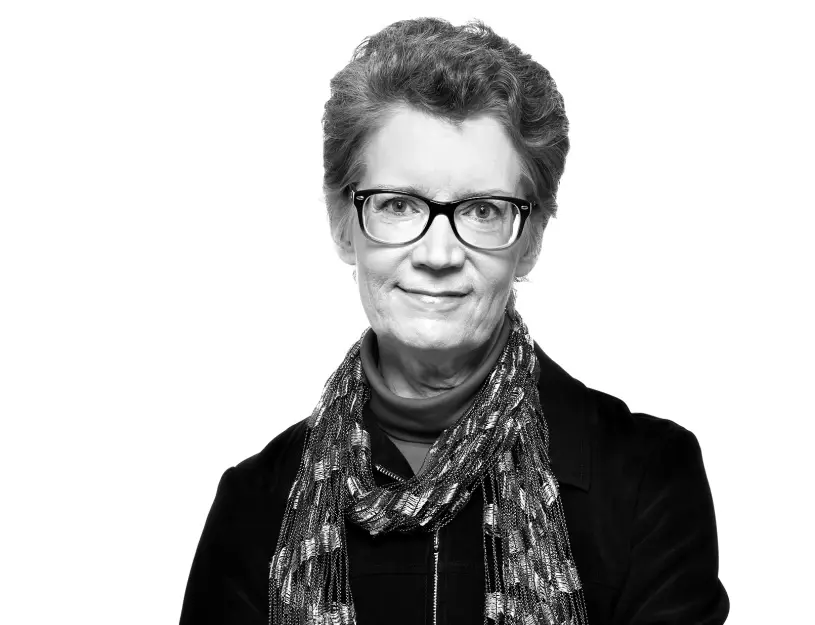
“Every time I hear it, which is very often now, it gives me a little happy twinge.” — Christine Peterson, Cofounder of Foresight Institute
SOURCES
How I coined the term ‘open source’. article from opensource.com