Foresight Institute Announces 2023 Feynman Prize Winners, Honoring Groundbreaking Achievements in Nanotechnology
Established in 1986, Foresight Institute is a pioneering non-profit organization dedicated to the advancement of molecular manufacturing and transformative technologies. Navigating scientific areas often seen as too ambitious for traditional institutions, Foresight Institute is committed to shaping the long-term future of life through these technologies. Awarded since 1993, Foresight Institute’s Feynman Prizes celebrate both established and emerging talents in the field of nanotechnology, embodying their vision of steering transformative technologies to benefit humanity.
Celebrating Excellence in Nanotechnology: The Feynman Prizes
Foresight Institute’s acclaimed Feynman Prizes, named in honor of the renowned physicist Richard Feynman, laud notable accomplishments in nanotechnology, focusing on atomically precise manufacturing through innovative nanosystems. Foresight Institute also bestows the Distinguished Student Award, spotlighting an upcoming individual for their exceptional work in advancing nanotechnology development and understanding.
The Feynman Prizes have a knack for spotting future Nobel laureates. Just ask Sir Fraser Stoddart (2007 Feynman Prize Winner, 2016 Nobel Prize Winner) or David Baker (2004 Feynman Prize Winner, 2024 Nobel Prize Winner).
“…the rewards awaiting those who achieve significant nanotechnology breakthroughs will be far greater than the prize itself…”
– K. Eric Drexler, Founder of the Feynman Prizes
2023 Winners’ Spotlight
Feynman Prize in Theory: Professor Alexandre Tkatchenko, University of Luxembourg
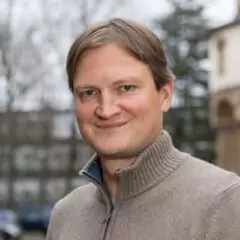
Alexandre Tkatchenko
Professor Alexandre Tkatchenko, fellow of the American Physical Society, leads a multidisciplinary team of 35 researchers who are revolutionizing the accuracy and efficiency of quantum-mechanical methods and making them applicable to realistic (bio)molecular systems. Tkatchenko graduated in computer science, did a PhD in physical chemistry, a postdoc in condensed matter physics, and became a professor of physics at the University of Luxembourg in 2015. His legacy in the field is underscored by the development of methods that seamlessly merge quantum mechanics, statistical mechanics, and machine learning to unravel the intricacies of complex molecules and materials. Recognized with accolades such as the 2020 Dirac Medal, the van der Waals award, and three European Research Council grants, Tkatchenko has shaped the understanding in his field, particularly through pioneering work in modeling critical van der Waals interactions and leading innovative research in machine-learned force fields. Tkatchenko is also a co-founder of Quastify GmbH – a start-up that strives to provide efficient means to navigate chemical spaces.
Feynman Prize in Experiment: Professor James J. Collins, MIT
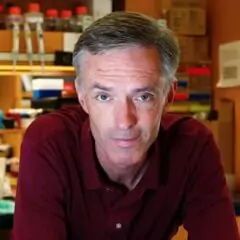
James J. Collins
Professor James J. Collins from MIT has fundamentally shaped the field of synthetic biology with his groundbreaking work on synthetic gene circuits, delivering practical applications in diagnostics and therapeutics. Stationed at the Wyss Institute at Harvard University and the Broad Institute, Collins’ work goes beyond the lab, with technologies licensed to over 25 biotech firms and several co-founded companies. His creation of a genetic toggle switch has pioneered programmable diagnostics and introduced the potential for on-demand production of critical medical supplies, such as vaccine antigens and antibiotics. With accolades like the MacArthur “Genius” Award, Collins synthesizes his roles as an academic and entrepreneur, providing innovative health solutions that span globally and influencing both the scientific and medical communities.
Distinguished Student Award: Qiancheng Xiong, Yale University

Qiancheng Xiong, of Yale University, has an exceptional trajectory in molecular nanotechnology. Xiong has developed notable programmable DNA nanodevices. His significant role in using CRISPR-Cas12a technology to refine DNA-origami structures has paved the way for future dynamic nanodevices in cellular studies. Moreover, his work with hybrid toxin-DNA nanopores demonstrates potential in creating synthetic compartments with controlled molecular exchange and holds promise for targeted applications in diseased cell perforation. His collaborative studies, employing DNA-origami nanostructures, have spotlighted the versatility of molecular nanotechnology in probing biological systems. Beyond his research, Xiong has made substantial contributions to the field and teaching, illuminating the potential of DNA nanotechnology through his co-authored review on DNA origami-engineered nanomaterials.
About Foresight Institute
Foresight Institute is a nonprofit dedicated to advancing beneficial, high-impact technologies. Since 1986, it has focused on fields often neglected by traditional institutions – including nanotechnology, neurotechnology, safe AI, longevity, and space. Its global community includes Nobel laureates, pioneering technologists, investors, builders, and leading academics, all working to accelerate breakthroughs that expand human potential.
Press contact
Lisa Stenvinkel
Communications Manager
[email protected]