Foresight Institute Announces 2024 Feynman Prize Winners, Honoring
Groundbreaking Achievements in Nanotechnology
Established in 1986, Foresight Institute is a pioneering non-profit organization dedicated to the advancement of molecular manufacturing and transformative technologies. Navigating scientific areas often seen as too ambitious for traditional institutions, Foresight Institute is committed to shaping the long-term future of life through these technologies. Awarded since 1993, Foresight Institute’s Feynman Prizes celebrate both established and emerging talents in the field of nanotechnology, embodying their vision of steering transformative technologies to benefit humanity.
Celebrating Excellence in Nanotechnology: The Feynman Prizes
Foresight Institute’s acclaimed Feynman Prizes, named in honor of the renowned physicist Richard Feynman, laud notable accomplishments in nanotechnology, focusing on atomically precise manufacturing through innovative nanosystems. Foresight Institute also bestows the Distinguished Student Award, spotlighting an upcoming individual for their exceptional work in advancing nanotechnology development and understanding.
The Feynman Prizes have a knack for spotting future Nobel laureates. Just ask Sir Fraser Stoddart (2007 Feynman Prize Winner, 2016 Nobel Prize Winner) or David Baker (2004 Feynman Prize Winner, 2024 Nobel Prize Winner).
“…the rewards awaiting those who achieve significant nanotechnology breakthroughs will be far greater than the prize itself…”
– K. Eric Drexler, Founder of the Feynman Prizes
2024 Winners’ Spotlight
Feynman Prize in Theory: Prof Dr Klaus-Robert Müller
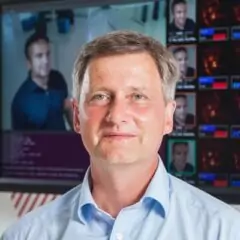
Prof Dr Klaus-Robert Müller
Klaus-Robert Müller is a professor of computer science at Technische Universität Berlin and Co-director of the Berlin Institute for the Foundations of Learning and Data (BIFOLD). He studied physics in Karlsruhe from1984 to 1989 and obtained his Ph.D. degree in computer science at Technische Universität Karlsruhe in 1992. After completing a postdoctoral position at GMD FIRST in Berlin, he was a research fellow at the University of Tokyo from 1994 to 1995. In 1995, he founded the Intelligent Data Analysis group at GMD-FIRST (later Fraunhofer FIRST) and directed it until 2008. From 1999 to 2006, he was a professor at the University of Potsdam.
From 2012 he has been Distinguished Professor at Korea University in Seoul. In 2020/2021 he spent his sabbatical at Google Brain as a Principal Scientist. Among others, he was awarded the Olympus Prize for Pattern Recognition (1999), the SEL Alcatel Communication Award (2006), the Science Prize of Berlin by the Governing Mayor of Berlin (2014), the Vodafone Innovations Award (2017), Hector Science Award (2024), Pattern Recognition Best Paper award (2020), Digital Signal Processing Best Paper award (2022). In 2012, he was elected member of
the German National Academy of Sciences-Leopoldina, in 2017 of the Berlin Brandenburg Academy of Sciences, in 2021 of the German National Academy of Science and Engineering and also in 2017 external scientific member of the Max Planck Society. From 2019 on he became an ISI Highly Cited researcher in the cross-disciplinary area. His research interests are intelligent data analysis and Machine Learning in the sciences (Neuroscience (specifically Brain-Computer Interfaces, Physics, Chemistry) and in industry.
Feynman Prize in Experiment: Saw Wai Hla, PhD

Prof Dr Saw Wai Hla
Saw Wai Hla is a professor of physics at Ohio University and a physicist at the Argonne National Laboratory. He is also the director of Ohio University’s Nanoscale and Quantum Phenomena Institute, which aims to advance cross-disciplinary research, educational, and technological innovation efforts in active areas of materials science and engineering by promoting nanoscience techniques, theory, and infrastructure. He is a world-leading researcher in atomic and molecular manipulation on material surfaces and synchrotron X-ray studies of individual atoms and molecules. His research focuses on nano, and quantum properties of materials, in particular quantum and mechanical properties of molecular machines, and rare-earth molecular systems for energy applications. He has received a transformative faculty award from Ohio University, the Sam Bader award for exceptional research achievements from Argonne National Laboratory, and recently the Science Breakthrough of the Year 2024 Laureate Award for Physical Sciences from Falling Walls Foundation, Germany, for breaking 128 years of X-rays history.
RESEARCH STATEMENT: During the last decade, Saw Wai Hla’s outstanding experimental research has greatly contributed to the advancement of molecular machine research and atomically precise manipulation and characterization of molecules on solid surfaces. Hla demonstrated the first controlled rotation of a standalone multicomponent molecular motor and collective responses of molecular motors in a self-assembled motor network. Hla has also demonstrated the controlled rotation of molecular propellers based on chirality and 100% control of the rotation of a rare-earth-based molecular complex. Designing complex nanomechanical systems demands atomically precise information on the elemental, and chemical properties of atoms in molecules, and recently, he and his team have achieved identification of individual atoms in individual molecules using X-rays.
Distinguished Student Award Gabriella Gagliano

Gabriella Gagliano
Gabriella Gagliano is a fifth year PhD student in the Applied Physics program at Rice University. She currently works in the lab of Dr. Anna-Karin Gustavsson where her research focuses on developing new optical methods to improve our understanding of health, aging, and disease at the nanoscale. Specifically, she has been working on a new single-molecule super-resolution microscope for improved cellular imaging at the nanoscale. She is interested in the application of physics for developing technologies of positive social impact and is dedicated to the ongoing pursuit of using physics to understand the nature of reality.
RESEARCH STATEMENT: Gabriella Gagliano’s work focuses on leveraging advanced microscopy and optical techniques to develop imaging tools for applications in fields spanning from biophysics and biomedicine to radiation chemistry. Specifically, Gabriella has constructed an innovative microscopy platform which enables fast, accurate, and precise 3D single-molecule super-resolution imaging of cellular structures and their interactions at the nanoscale. This platform, capable of revealing intracellular protein organization, function, and single-molecule dynamics, opens new possibilities for understanding the spatial relationship between subcellular components and the molecular mechanisms that drive cellular behavior in health and pathogenesis.
About Foresight Institute
Foresight Institute is a nonprofit dedicated to advancing beneficial, high-impact technologies. Since 1986, it has focused on fields often neglected by traditional institutions – including nanotechnology, neurotechnology, safe AI, longevity, and space. Its global community includes Nobel laureates, pioneering technologists, investors, builders, and leading academics, all working to accelerate breakthroughs that expand human potential.
Press contact
Lisa Stenvinkel
Communications Manager
[email protected]